


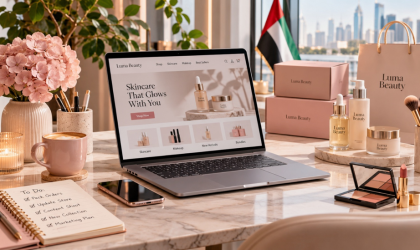

Launching an online beauty business in the UAE sounds straightforward. Find the right products, build an attractive website, create engaging social media content and start selling.
However, cosmetics are not ordinary retail products. Before you sell your first skincare serum, lipstick or fragrance, you need to make sure your business and products meet UAE regulatory requirements.
Unlike many other e-commerce businesses, selling cosmetics online involves three important compliance layers: a valid trade licence, the required product registrations and approvals, and compliant product labelling.
Missing any of these can delay your launch, create problems with imported stock or prevent products from reaching customers.
The good news is that you do not necessarily need to establish your business in Dubai to sell beauty products across the UAE. Entrepreneurs can establish their companies in Sharjah through Shams Free Zone, provided they obtain the appropriate business activities and complete the relevant product compliance procedures.
This guide explains how to sell cosmetics online in the UAE, from choosing your licence and registering products to accepting payments and building a beauty brand that attracts customers.
The Three Compliance Layers for Selling Cosmetics Online in the UAE
Before investing in inventory or launching your online store, understand the three requirements that form the foundation of a compliant cosmetics business.
Your E-commerce Licence
The first step is obtaining a valid UAE trade licence that covers your intended business activities.
If you plan to sell skincare products, makeup, fragrances, haircare products or other beauty items through a website or online marketplace, your licence must authorise the relevant trading activity.
Depending on your business model, this may involve activities covering:
- Cosmetics and beauty product trading
- Perfumes and personal care product trading
- E-commerce or online retail
- Importing and distributing beauty products, where permitted
An e-commerce activity alone may not cover every type of product trading or import operation. The precise activity combination should be confirmed with your licensing authority.
Entrepreneurs can explore a Shams Free Zone business licence to establish a UAE company for eligible online trading activities.
A Sharjah-based company can potentially serve customers throughout the UAE, but the free zone licence does not automatically replace any additional permissions required for mainland distribution, physical retail operations, customs clearance or regulated products.
For example, if you establish a cosmetics company through Shams and sell products to customers in Dubai, you must still meet the applicable product compliance and distribution requirements.
Product Registration
Obtaining your business licence does not automatically authorise every cosmetic product for sale.
Cosmetics and personal care products are subject to product safety and conformity requirements. Depending on the product and the emirate in which it is imported, registered or marketed, additional local procedures may apply.
At the federal level, the Ministry of Industry and Advanced Technology (MoIAT) oversees conformity assessment for regulated products under the UAE Conformity Assessment Scheme (ECAS).
The ministry’s cosmetics conformity service covers categories including skincare, makeup, haircare, nail products and sunscreens. Applications can require product testing, ingredient declarations and supporting manufacturer documentation.
MOIAT eServices
Dubai Municipality also operates Montaji, its consumer product registration system. Businesses bringing cosmetics into the Dubai market may need to complete the applicable registration procedures through that system.
Dubai Municipality+1
What about cosmetics businesses based in Sharjah?
A company registered in Sharjah should not assume that every product must follow an identical Dubai registration process.
Sharjah Municipality has its own public health procedures relating to cosmetics and personal care consignments. These include procedures for releasing commercial shipments and transferring non-food products between emirates.
The appropriate process depends on the product, its conformity status, its import route and where it will be distributed.
The practical approach is to confirm the applicable MoIAT conformity requirements and Sharjah Municipality procedures before importing stock. If your distribution model also brings products under Dubai Municipality’s registration requirements, those must be addressed separately.
Labelling and Conformity

Even a high-quality cosmetic product can face regulatory problems if its packaging does not meet UAE requirements.
Cosmetic labels generally need to provide information such as the product name, manufacturer or responsible supplier details, country of origin, ingredients, quantity, batch identification, expiry or durability information where applicable, and instructions or warnings.
Arabic labelling requirements should be checked for the particular product and approval route. An English-only label should not be assumed sufficient simply because the product was manufactured overseas.
For imported cosmetics, additional Arabic information may be supplied through an approved supplementary label where permitted.
Your product’s claims must also be accurate and supported. Descriptions such as “cures acne”, “permanently removes pigmentation” or “treats eczema” can raise regulatory concerns because they may suggest medicinal rather than cosmetic functions.
A cosmetic product should not be marketed as a medicine unless it has the appropriate classification and authorisation.
Before printing thousands of labels, have the final packaging and claims reviewed against the applicable UAE requirements.
When Halal Certification Applies
Halal certification is an important consideration for certain beauty brands, particularly those marketing products with halal claims or using ingredients that raise questions about their source.
However, not every cosmetic product sold in the UAE automatically requires halal certification.
The need for certification depends on the product, its ingredients, applicable regulatory requirements and any halal claims made by the manufacturer or seller.
For example, a skincare brand that explicitly markets its products as halal-certified should have valid certification supporting that claim.
Ingredients such as animal-derived collagen, gelatin or certain other animal-based substances may require additional scrutiny.
Brands should distinguish between three situations:
Products without halal claims: These still need to comply with applicable cosmetic safety and ingredient requirements, but halal certification should not be presented as a universal requirement.
Products marketed as halal: Claims must be substantiated through the appropriate certification and conformity process.
Products containing ingredients requiring additional verification: Manufacturers may need to provide ingredient origin declarations, supporting documentation or other evidence requested by the relevant authority.
If halal positioning is central to your brand, build certification requirements into your sourcing and product development process before launching.
This is particularly important for private-label beauty businesses that intend to sell across multiple markets.
The Documents Behind Every Cosmetic Product
One of the most common mistakes new beauty entrepreneurs make is purchasing inventory before checking whether the manufacturer can provide the documents needed for UAE compliance.
A supplier may offer attractive prices and professional packaging, but that does not guarantee the products are ready for the UAE market.
Before committing to an order, request a complete product documentation file.
| Document | Why it matters |
|---|---|
| Valid trade licence | Establishes the business’s authorised activities |
| Full ingredient and formula declaration | Supports product safety and conformity assessment |
| Laboratory test reports | Provides evidence of compliance with relevant technical standards |
| Certificate of Free Sale, where required | Helps establish the product’s status in its country of origin |
| Manufacturer details | Identifies the source and responsible producer |
| Product label artwork | Allows review of ingredients, warnings and required information |
| Certificate of Conformity, where applicable | Demonstrates compliance with the relevant regulated product requirements |
| Supplier invoices and shipping documents | Supports traceability, import procedures and customs clearance |
| Halal certificate, where applicable | Supports relevant halal claims or certification requirements |
MoIAT’s conformity service identifies a valid trade licence and accredited laboratory test reports among its requirements, while Dubai Municipality’s consumer product guidance provides alternative documentary routes for certain product assessments.
Ministry of Industry+1
Not every document will be required in every case, but you should know what your supplier can provide before paying for inventory.
For private-label products, additional information may be necessary because you are introducing products under your own brand.
If a manufacturer refuses to disclose ingredients or cannot provide reliable product documentation, reconsider the supplier.
It is much easier to change manufacturers before placing an order than to resolve compliance problems after stock arrives.
Own Store, Marketplaces or Both?
Once your products meet the relevant compliance requirements, the next decision is where to sell them.
Beauty businesses in the UAE generally have three routes: launching an independent e-commerce website, selling through established marketplaces or combining both channels.
Each offers different advantages.
Selling Through Your Own Website
Building your own online beauty store gives you greater control over branding, customer relationships and the shopping experience.
Platforms such as Shopify and WooCommerce allow businesses to create product catalogues, accept payments and manage orders.
An independent store is particularly useful for beauty brands that want to develop a recognisable identity.
You can create detailed skincare guides, publish tutorials, introduce product bundles and build customer loyalty programmes.
You also control how your products are presented, rather than competing directly with dozens of similar listings.
However, your website needs a reliable source of visitors. This usually means investing in social media marketing, search engine optimisation, influencer collaborations or paid advertising.
Selling Through Online Marketplaces
Marketplaces such as Amazon UAE and noon can help beauty sellers reach customers who already shop online.
Marketplaces provide established shopping infrastructure, including product discovery, payment processing and fulfilment options.
However, sellers must meet the platform’s onboarding and product compliance requirements.
Beauty products may require additional documentation, including proof of authenticity, product approvals, supplier invoices or brand authorisation.
Marketplace acceptance does not replace the legal obligations attached to selling regulated products.
Combining Both Channels
For many beauty entrepreneurs, a combined strategy makes sense.
Your website becomes the centre of your brand, while marketplaces provide additional opportunities for customer acquisition.
For example, you might use Instagram to introduce your skincare range, direct loyal customers to your website and list selected products on Amazon UAE.
This approach can diversify sales channels without relying entirely on one platform.
Before expanding, calculate the impact of marketplace commissions, fulfilment fees, advertising expenses and returns on your profit margins.
Payments: Cards, Cash on Delivery and Instalments
Customers may love your products, but a complicated checkout process can still cost you sales.
When selling cosmetics online in the UAE, offering convenient payment options can make purchasing easier.
Card Payments
Debit and credit cards are essential for most online stores.
You can explore payment gateway providers that support UAE businesses, such as Telr, PayTabs or other compatible services.
Gateway approval depends on your business activity, licensing documents, banking arrangements and the provider’s underwriting requirements.
Before selecting a gateway, compare transaction fees, settlement periods, refund handling and integration with your e-commerce platform.
Cash on Delivery
Cash on delivery (COD) remains an option worth considering, particularly for customers who prefer to pay when their orders arrive.
However, COD introduces additional operating costs.
Failed deliveries, refused packages and delayed cash collection can affect profitability.
If you offer COD, establish clear order confirmation procedures and track unsuccessful deliveries.
Buy Now, Pay Later
Buy now, pay later services, including Tabby and Tamara, may be useful for higher-value beauty purchases.
Customers may appreciate instalment options when purchasing premium skincare sets, fragrances or larger product bundles.
Availability depends on merchant eligibility and provider approval.
The best payment strategy is not necessarily the one with the most options. It is the one that gives your customers a convenient checkout experience while keeping transaction costs manageable.
Marketing Beauty: Why Instagram Should Be a Priority
Beauty products are highly visual. Customers want to see colours, textures, packaging and realistic product demonstrations before buying.
This makes Instagram a useful marketing channel for an online cosmetics business.
However, posting attractive product photographs is only the beginning.
Successful beauty marketing combines product education, consistent branding and trustworthy customer experiences.
Build Content Around Real Customer Questions
Instead of posting only promotional images, create content that helps customers understand your products.
For example, a skincare business might explain the difference between hydrating and moisturising products, demonstrate how to apply a serum or discuss how to build a simple skincare routine.
A makeup brand could publish shade comparisons, application tutorials and product demonstrations under different lighting conditions.
Educational content helps potential customers make informed purchasing decisions.
Work With Relevant Beauty Creator
Beauty creators can introduce your products to audiences who are interested in skincare, makeup and personal care.
However, influencer marketing in the UAE involves advertising and media compliance considerations.
Depending on the activity and campaign, creators may need the relevant UAE Media Council advertiser permissions. Businesses should also ensure that paid collaborations are properly disclosed and that promotional claims are accurate.
Avoid encouraging creators to make unsupported claims about product performance.
A cosmetic product should not be described as curing a medical condition simply because the statement appears in an influencer video rather than on the product label.
Use Customer Reviews Responsibly
Authentic customer reviews can help new shoppers feel more confident.
Encourage customers to share their experiences, but avoid exaggerated testimonials or misleading before-and-after imagery.
Obtain permission before reposting customer photographs or videos.
Adapt Your Content for UAE Customers
An online beauty business can benefit from creating content that reflects local customer needs.
This may include Arabic and English product information, mobile-friendly shopping experiences and content relevant to the UAE’s climate.
For example, lightweight skincare textures, sun protection and long-wearing makeup may be useful topics for customer education.
However, any specific product performance claims must be supported by appropriate evidence.
A consistent Instagram presence, supported by a professional website and responsive customer service, can help turn initial interest into repeat purchases.
Step by Step: From Licence to First Sale
Starting an online cosmetics business becomes easier when you follow the right sequence.
The key is to address licensing and product compliance before committing heavily to inventory or advertising.
- Choose your beauty business model
Decide whether you will resell established brands, import products, create a private-label range or develop your own formulations. Your choice affects sourcing, documentation and regulatory responsibilities.
- Select the appropriate business activities
Identify the trading and e-commerce activities required for your planned operations. If you are considering Shams Free Zone, confirm that your selected activities cover the intended products and sales model.
- Establish your UAE company
Complete the company formation process, obtain your trade licence and arrange any required residency visas or business banking services.
- Verify your products and suppliers
Obtain ingredient declarations, manufacturer information, laboratory reports and other supporting documents. Check whether the products are eligible for UAE conformity assessment and registration.
- Complete the applicable product approvals
Address MoIAT conformity requirements and the relevant municipal registration or shipment-release procedures. Confirm the correct route for Sharjah-based operations and any additional requirements in the markets you intend to serve.
- Finalise labelling and packaging
Ensure product labels contain the required information and that all claims are accurate. Review Arabic labelling obligations before ordering final packaging.
- Build your online store
Add product descriptions, clear photographs, prices, delivery information, refund policies and customer support details. Configure your payment gateway and shipping arrangements.
- Launch your marketing channels
Prepare Instagram content, product demonstrations, educational posts and compliant promotional campaigns.
- Start selling and monitor performance
Once the required approvals are in place, begin accepting orders. Track delivery performance, returns, customer feedback and product profitability.
Starting with a smaller, carefully selected product range can help you control costs while testing customer demand.
It also makes managing documentation and compliance more practical than launching dozens of products at once.
Market-Entry Mistakes to Avoid
Launching a beauty brand involves more than creating a website and finding customers.
Several avoidable mistakes can increase costs or delay operations.
Buying Products Before Checking Compliance
Importing large quantities of cosmetics before confirming conformity and registration requirements is a significant risk.
Products may require additional testing, documentation or labelling changes before they can be released or sold.
Always verify the compliance position before committing to substantial inventory.
Assuming a Trade Licence Covers Product Registration
A cosmetics trading licence establishes your company’s legal business activities. It does not automatically certify the safety or compliance of individual products.
Treat company licensing and product approvals as separate processes.
Following Dubai Procedures Without Checking Sharjah Requirements
Many online guides focus exclusively on Dubai Municipality’s Montaji system.
However, businesses established in Sharjah should also consider the relevant Sharjah Municipality requirements.
For example, Sharjah Municipality publishes a service for the release and transfer of commercial cosmetics and personal care shipments between emirates. Its service documentation identifies trade licensing, product conformity evidence and customs documentation among the requirements.
shjmun.gov.ae
The published service also specifies conditions relating to remaining product shelf life and label information.
This does not establish a single universal registration portal for every Sharjah-based cosmetics seller. The correct process should be confirmed for the specific product, shipment and distribution model.
Making Unsupported Product Claims
Marketing language such as “guaranteed skin whitening”, “permanent acne treatment” or “clinically proven results” can create problems if the claims are unsupported or suggest medicinal functions.
Keep product descriptions accurate and consistent with the approved product classification.
Ignoring Storage and Delivery Conditions
Beauty products can be sensitive to heat, sunlight and improper storage.
This is particularly important when managing inventory and deliveries in the UAE.
Check manufacturer storage instructions and choose fulfilment arrangements that protect product quality.
Underestimating the True Cost of Selling
Your product purchase price is only one part of the business.
Other expenses can include registration and testing, shipping, customs, packaging, warehousing, payment processing, marketplace fees, returns and advertising.
Calculate your total cost per delivered order before setting retail prices.
A profitable beauty business needs both attractive products and sustainable operating margins.
Getting Beauty-Trade Ready With Shams
You do not have to establish your cosmetics business in Dubai simply because you intend to sell products to customers there.
Shams Free Zone, based in Sharjah, offers a company formation route for entrepreneurs interested in building businesses in the UAE.
For an online beauty retailer, this can provide a starting point for establishing a licensed company while developing a brand that serves customers across the country.
Depending on your selected activities and package, Shams can support the company formation process, including business licensing and available visa options.
A Shams-based cosmetics entrepreneur can focus on building an online store, developing supplier relationships and reaching customers through digital channels.
However, it is important to distinguish between what a free zone licence provides and what separate regulatory authorities require.
Shams issues business licences for approved activities. It does not replace MoIAT conformity assessment, municipal product registration, customs procedures or other approvals that may apply to cosmetics.
Before applying, confirm the appropriate business activities and whether your operating model requires additional mainland permissions, distribution arrangements or import-related approvals.
This is particularly important for entrepreneurs importing cosmetics directly, operating warehouses or planning to expand into physical retail.
With the right structure and compliance planning, a Sharjah-based company can provide a practical foundation for a UAE-focused online beauty business.
Ready to launch your online cosmetics business?
Explore Shams Free Zone to learn about business setup options, licensing activities and the steps involved in establishing your company in Sharjah.
Frequently Asked Questions
What licence do I need to sell beauty products online in the UAE?
You need a valid UAE trade licence covering the relevant cosmetics or beauty product trading activities and your intended online sales model. Depending on the business, you may need both product-specific trading and e-commerce activities. Additional product conformity, registration and import requirements can apply.
How do I register cosmetic products in the UAE?
First, determine the applicable product classification and conformity requirements through MoIAT. Prepare the necessary product documentation, which may include ingredient declarations, laboratory test reports and manufacturer details. Then complete the relevant municipal registration or shipment procedures. Dubai Municipality uses Montaji, while Sharjah-based sellers should confirm the applicable procedures with Sharjah Municipality and other relevant authorities.
Do I need halal certification to sell cosmetics in the UAE?
Not every cosmetic product requires halal certification. However, products marketed as halal must have appropriate evidence supporting that claim, and certain ingredients may require additional verification. The UAE has specific halal standards for cosmetics and personal care products, including UAE.S 2055-4.
Which payment methods matter most for an online beauty store?
Debit and credit card payments are important for online cosmetics stores. Cash on delivery may also be useful, depending on customer preferences and delivery arrangements. Buy now, pay later services can be considered for higher-value purchases, subject to provider eligibility and approval.
Can I sell cosmetics on marketplaces and my own website?
Yes. A licensed cosmetics business can potentially sell through its own website and online marketplaces such as Amazon UAE and noon. However, the business must meet the relevant product compliance requirements and each platform’s seller onboarding rules. A marketplace listing does not replace required product approvals.