


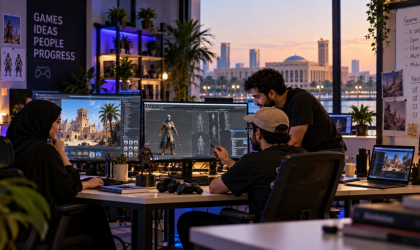

The UAE is becoming an increasingly attractive destination for gaming entrepreneurs. From independent game developers and esports teams to tournament organisers and content creators, the industry offers opportunities for businesses of different sizes.
You do not need to launch a major gaming studio or invest in an expensive esports facility to enter the market. A small development team, an esports management company or a gaming content business can start with a relatively lean structure, provided it has the right business licence and approvals.
However, gaming business setup in the UAE is not a one-size-fits-all process. Developing video games, managing professional players, organising tournaments and streaming sponsored content are different commercial activities. Each may require a different licensing scope, and some involve additional permits.
This guide explains how to start a gaming or esports business in the UAE, which activities to consider, how tournament permissions work and why Sharjah can be a practical base for independent studios and growing esports businesses.
Five Gaming Business Models, One Licence Question
Before applying for a gaming licence in the UAE, decide exactly how your business will generate revenue.
A gaming company can operate through several models, but the activities listed on its trade licence must match the services it actually provides.
Game Development and Publishing
Game development businesses create video games for mobile devices, computers, consoles and other platforms.
They may develop their own intellectual property, work on projects for other publishers or provide specialist services such as programming, animation, sound design and game testing.
Common revenue streams include game sales, subscriptions, in-game purchases, licensing agreements and development contracts.
Publishing is a related but distinct activity. A publisher may finance development, manage distribution, promote games and negotiate commercial agreements with digital platforms.
A game development business may require software development or other relevant technology activities, while publishing and distribution may need additional activities or approvals depending on the business model.
For independent developers, a free zone company can provide a formal business structure for signing international contracts, invoicing clients and managing intellectual property.
Esports Teams and Player Management
Esports businesses focus on competitive gaming.
An esports organisation might recruit professional players, manage competitive teams, negotiate sponsorships, create branded merchandise and generate revenue through tournament participation.
Player management is another opportunity. Businesses can help esports professionals negotiate contracts, secure brand partnerships and manage commercial relationships.
The important distinction is that owning an esports team is not necessarily the same activity as operating a sports agency or organising competitions.
Depending on the services provided, an esports company may need management, marketing, sports-related or other specifically approved activities.
Businesses should also consider player agreements, sponsorship rights, tournament eligibility and intellectual property ownership.
Tournaments and Events

Esports tournaments bring together players, audiences, sponsors and gaming brands.
Events can range from small community competitions to large professional tournaments with ticket sales, commercial sponsors and prize pools.
Tournament organisers may generate revenue through sponsorship agreements, ticketing, broadcasting rights, brand activations and event management fees.
However, having a business licence does not automatically authorise a company to organise public gaming events.
Additional permissions may be required from the relevant emirate’s event authorities, venue operators and other regulators.
For businesses planning competitions in Sharjah, these requirements should be checked before confirming venues, selling tickets or announcing tournament dates.
Gaming Content and Streaming
Gaming content creation has developed into a business category of its own.
Creators and media companies produce livestreams, gameplay videos, reviews, tutorials, esports commentary and branded entertainment.
Popular distribution channels include YouTube, Twitch, TikTok and other digital platforms.
Revenue may come from advertising, subscriptions, sponsorships, affiliate marketing and content production contracts.
A gaming content company should select activities that reflect its actual work, such as media production, digital content creation or marketing services where available.
Commercial promotional content may also trigger UAE Media Council requirements, including advertiser permit obligations for relevant individuals.
A business licence and an individual advertising permit serve different purposes. One does not automatically replace the other.
Gaming Technology and Support Services
Not every gaming business creates games or competes in tournaments.
The industry also needs companies providing technical and commercial support.
Examples include game localisation, quality assurance testing, 3D animation, user interface design, community management, analytics and software development.
These services can be particularly suitable for smaller businesses because they may not require physical gaming facilities.
A company can begin by serving international studios and gradually expand into its own games or gaming products.
For founders exploring a low-overhead business model, specialist gaming services can provide a practical entry point into the UAE market.
Activity Codes and What They Cover
One of the most important decisions in gaming company setup is selecting the correct business activities.
There is no single universal gaming licence that automatically covers every gaming-related business model in the UAE.
The correct activity depends on what the company does, how it earns revenue and which authority issues its licence.
| Business model | Activities to discuss with the licensing authority |
|---|---|
| Video game studio | Software development, computer programming, game development where available |
| Game publisher | Software publishing, digital publishing or related approved activities |
| Esports team | Team management, sports-related management or other applicable activities |
| Tournament organiser | Event management, event organisation and relevant esports activities |
| Gaming streamer | Media production, digital content creation or relevant marketing activities |
| Gaming consultancy | Technology consultancy, business consultancy or related services |
| Game localisation | Translation, localisation, software testing or technical services |
These are indicative activity categories, not official Shams activity codes. Exact activity names, codes, permitted scopes and any external approvals must be confirmed with the licensing authority.
For example, a company developing mobile games and producing promotional videos may need more than one approved activity.
Similarly, an esports business that manages players and organises public competitions should not assume that one management activity covers both services.
Choosing the correct activities at the beginning can reduce the risk of delays when opening a bank account, signing commercial contracts or expanding operations.
Event Permits for Public Tournaments
Esports tournaments introduce requirements that do not necessarily apply to ordinary game development businesses.
The key distinction is between a company’s commercial licence and permission to organise a specific event.
A trade licence allows the company to conduct its approved business activities. An event permit, where required, authorises a particular event under the relevant local rules.
Public tournaments may involve additional requirements relating to venue safety, ticketing, advertising, prize arrangements, broadcasting and audience participation.
For example, an esports company planning a tournament in Sharjah should consider:
- Whether the proposed event requires approval from the relevant Sharjah event authority.
- Whether the selected venue has the necessary permissions.
- Whether the event includes ticket sales, sponsorship activations or commercial advertising.
- Whether additional approvals are required for broadcasting or filming.
- Whether the competition involves minors and requires safeguarding arrangements.
- Whether game publishers permit the proposed tournament format and commercial use of their titles.
Tournament permissions are generally handled at the emirate level, and the requirements can differ between Sharjah, Dubai, Abu Dhabi and other locations.
For Sharjah, organisers should confirm the applicable process with the relevant local authority, which may include the Sharjah Commerce and Tourism Development Authority depending on the nature of the event, alongside the venue and any other competent authorities.
A Shams business licence should not be treated as automatic approval to host a public esports competition.
Online-only competitions may involve fewer physical-event requirements, but they still need to comply with applicable commercial, advertising, content and competition rules.
Businesses should also distinguish esports competitions from gambling activities. Prize-based tournaments require careful review of their format, entry fees and prize structure to avoid creating an unauthorised gambling arrangement.
IP, Content Compliance and Age Ratings
Intellectual property is one of the most valuable assets a gaming company can own.
A successful game can generate revenue for years through downloads, licensing, merchandise, sequels and partnerships. However, these opportunities depend on having clear ownership of the underlying assets.
Protecting Game Intellectual Property
Game developers should establish ownership of their software, characters, artwork, music, branding and other creative assets.
In the UAE, different forms of intellectual property may be protected through copyright, trademarks and other applicable laws.
For a gaming studio, important considerations include ensuring that employment and freelance contracts clearly address intellectual property ownership, obtaining appropriate licences for third-party assets and registering trademarks where commercially relevant.
This is particularly important when developers collaborate with overseas publishers or independent contractors.
A written agreement should explain who owns the finished game, who can distribute it and how revenue will be shared.
Video Game Content Rules and Age Ratings
Games distributed in the UAE must comply with applicable media content standards.
These rules can affect games containing sensitive themes, inappropriate content or material unsuitable for younger audiences.
The National Media Authority provides an electronic video games age-rating service. Its published requirements include game materials and intellectual property documentation, alongside a valid media licence for businesses importing or distributing video games in the UAE. The listed service fee is AED 500, with a stated processing time of five working days.
Developers should distinguish between producing a game for international markets and distributing it commercially within the UAE. The applicable classification requirements may differ depending on the distribution channel and format.
Digital storefronts may also apply their own age-rating and content policies.
Before releasing a game, publishers should confirm the applicable requirements with the relevant authority and distribution platform.
Using Existing Games in Esports Competitions
Tournament organisers must also consider the rights of game publishers.
Buying a video game does not necessarily grant permission to organise a commercial competition using that title.
Depending on the publisher’s rules, an organiser may need permission to use game footage, official branding, tournament formats or broadcasting rights.
Reviewing publisher tournament policies before launching an event can help prevent disputes and unexpected restrictions.
The UAE Gaming Ecosystem and Visas
The UAE gaming ecosystem includes developers, publishers, esports organisations, technology companies, creators and professional players.
Although many industry initiatives receive attention in Dubai and Abu Dhabi, businesses do not necessarily need to establish themselves in those cities to participate.
A company based in Sharjah can collaborate with developers, publishers and esports organisations across the UAE and internationally, subject to its licensed activities and applicable operating requirements.
The Emirates Esports Federation
The Emirates Esports Federation plays an important role in developing competitive gaming in the UAE.
Its activities include supporting esports participation, encouraging talent development and helping coordinate the national competitive gaming ecosystem.
The federation also works to promote professional esports and participation in international competitions.
For esports entrepreneurs, understanding this ecosystem can be useful when exploring partnerships, competition participation and industry development.
However, establishing a gaming company does not automatically provide federation membership, tournament recognition or eligibility to participate in official competitions.
Businesses should contact the federation directly when those requirements are relevant.
Residency Visas for Gaming Entrepreneurs
Foreign entrepreneurs establishing a gaming business in the UAE may be eligible to apply for residency visas through their company.
Depending on the selected setup package and applicable immigration requirements, businesses may be able to sponsor founders and employees.
This can be relevant for studios hiring programmers, designers, animators, project managers and other specialists.
Esports organisations recruiting international players should also consider the immigration arrangements required for professional activities, training and competition participation.
Visa eligibility and allocations depend on the company structure, selected package and relevant government approvals.
Free Zone vs Mainland: The Cost Base Question
Choosing between a free zone and mainland structure is an important decision when starting a gaming business in the UAE.
Both options can support gaming-related businesses, but their advantages depend on the activities involved.
| Consideration | Free zone | Mainland |
|---|---|---|
| Foreign ownership | 100% ownership generally available | 100% ownership available for most activities |
| Game development | Suitable for digital-first studios | Suitable for studios serving UAE clients |
| International publishing | Suitable, subject to activity and distribution requirements | Suitable, subject to the same relevant requirements |
| Physical gaming venues | May require additional arrangements and approvals | Often more practical for premises-based operations |
| Public esports events | Separate event permissions may be required | Separate event permissions may be required |
| Office requirements | Flexible options may be available | Depends on the activity and licensing authority |
| Setup costs | Can be economical for smaller teams | Varies by location, premises and activity |
For independent developers, the biggest expense may not be the business licence.
Software subscriptions, workstations, cloud infrastructure, game engines, testing equipment and salaries can represent a much larger share of operating costs.
A business developing mobile games with a remote team may have little need for a large commercial office.
By contrast, a company operating a gaming arena, esports training facility or public entertainment venue may need dedicated premises and additional approvals.
The most suitable jurisdiction is the one that supports the actual business model without adding unnecessary overhead.
Sharjah can be worth considering for founders who want a UAE company while keeping more of their budget available for development, marketing and talent.
How to Set Up, Step by Step
Starting a gaming or esports company in the UAE becomes easier when the process is organised around the business model.
Step 1: Define Your Gaming Business Model
Decide whether you will develop games, publish titles, manage players, produce gaming content or organise tournaments. Identify your revenue streams and target customers.
Step 2: Select Your Business Activities
Discuss your proposed activities with the licensing authority. If your company combines development, publishing and esports services, confirm whether multiple activities can be included.
Step 3: Choose Your Jurisdiction
Compare free zone and mainland structures based on your business model, office requirements, planned workforce and budget.
Step 4: Register Your Company
Reserve a suitable trade name, submit the required documents, select your licence package and complete the incorporation process.
Step 5: Obtain Additional Approvals
Confirm whether your operations require game classification, media permissions, event permits or other sector-specific approvals.
Step 6: Arrange Banking and Visas
Apply for a corporate bank account and complete any required immigration procedures for founders and employees.
Step 7: Launch Your Business
Finalise your development tools, contracts, payment arrangements and marketing channels. If you plan public tournaments, obtain the necessary permissions before launching the event.
The incorporation process can be relatively straightforward for a digital-first business with clearly defined activities.
Businesses requiring additional regulatory approvals, physical premises or complex ownership structures should allow more time.
Documents and Banking
The documentation required to establish a gaming company depends on the jurisdiction, legal structure and proposed activities.
For a typical free zone application, founders may be asked to provide:
- Passport copies of shareholders and directors.
- Emirates ID and residency documents, where applicable.
- Proposed company names and business activities.
- Contact information and shareholder details.
- Additional corporate documents if a company will be a shareholder.
Certain activities may require supporting documents or external approvals.
Opening a Corporate Bank Account
After incorporation, a gaming company can apply for a UAE corporate bank account.
Banks may request information about the business model, expected transactions, customers and sources of funds.
For a game development studio, useful supporting documents may include a portfolio, development contracts, publishing agreements and projected revenue.
For esports organisations, banks may want to understand sponsorship income, player contracts, prize payments and international transactions.
Companies receiving payments through digital storefronts should also check platform payout requirements and supported banking arrangements.
Bank account approval is subject to the financial institution’s compliance procedures and is not guaranteed by company incorporation.
The Shams E-Gaming Path for Studios and Teams
For entrepreneurs looking to establish a gaming company without committing to an expensive physical operation, Sharjah Media City (Shams) offers a practical starting point.
Shams supports entrepreneurs across creative, media, technology and other business sectors, making it relevant for gaming businesses whose activities align with its approved licensing options.
An independent game developer may need a company to sign publishing agreements and receive international payments.
A gaming content creator may want a formal business structure for sponsorships and production contracts.
An esports management business may need an entity to handle commercial partnerships and operational expenses.
Each has different requirements, but all can benefit from selecting a structure that matches their scale.
Why Consider Shams for Gaming Business Setup?
Shams offers several advantages worth evaluating:
Flexible business setup: Entrepreneurs can explore approved activities that match their commercial plans, subject to licensing availability and any required external permissions.
100% foreign ownership: Eligible founders can establish their companies without requiring a local equity partner.
Cost-conscious setup: A flexible business structure can help smaller gaming companies preserve capital for equipment, development and growth.
Visa options: Depending on the selected package and eligibility, founders can explore residency visa arrangements.
Access to the wider UAE market: A Sharjah-based company can build relationships with gaming clients, publishers and esports organisations throughout the country and internationally, while observing applicable jurisdictional rules.
Shams also promotes fast business licensing options, including its 60-minute licence issuance service for eligible applications. Actual processing depends on documentation, activity selection and approvals.
For gaming founders, the most important first step is to confirm which development, media, management or related activities are currently available through Shams.
A standard Shams licence should not be presented as a blanket esports authorisation or a substitute for tournament and media approvals.
What Does a Gaming Business Licence Cost?
The total cost depends on the approved business activities, licence package, visa requirements and any additional services.
Shams has advertised business setup packages starting from AED 5,760. This is a general starting price, not a verified gaming-specific package quotation, and availability and inclusions should be confirmed directly with Shams.
Gaming entrepreneurs should also budget for software, equipment, intellectual property protection, specialist approvals and ongoing operating expenses.
For tournament businesses, event permissions can add substantial costs. Sharjah Municipality publishes an event-organisation permit service with a listed fee of AED 15,000 for the applicable permit category, while Sharjah Police lists an event permit fee of AED 1,000 per day. Applicability and current charges must be confirmed for the specific event; these are not universal fees for every esports competition.
A small studio developing games remotely will have a very different budget from a company organising large public esports events.
Start Your Gaming Business with Shams
Whether you are building your first mobile game, launching an esports team or establishing a gaming content company, choosing the right business structure can make future growth easier.
Shams Free Zone can help entrepreneurs explore suitable licensing activities, company formation options and visa packages for their business plans.
Ready to turn your gaming idea into a UAE business? Visit Shams Free Zone to explore your setup options and request guidance on the activities and approvals relevant to your business.
Frequently Asked Questions
What licence does a gaming or esports business need in the UAE?
The required licence depends on the business activities. Game developers may need software development activities, while esports management companies, tournament organisers and gaming content creators may require different activities. Additional approvals may apply to public events, publishing and media operations.
Can I develop and publish games internationally from a UAE free zone?
Yes. A properly licensed UAE free zone company can develop games and enter international publishing agreements, provided its approved activities cover the work. Businesses must also comply with intellectual property laws, platform policies and applicable distribution requirements in their target markets.
Can I organise esports tournaments under a gaming business licence?
A gaming business licence does not automatically authorise public tournaments. Organisers may need separate event permissions from the relevant emirate’s authorities, alongside venue approvals and any applicable sports or federation requirements. These should be confirmed before promoting or operating an event.
Can I sign esports players and teams through a UAE company?
Yes, a UAE company can enter player and team management agreements where its approved activities permit the relevant services. Businesses should address player contracts, sponsorship rights, immigration requirements, competition eligibility and any applicable sports regulations.
Can foreigners own a gaming business outright in the UAE?
Yes. Foreign entrepreneurs can generally own 100% of a UAE free zone company. Full foreign ownership is also available for most mainland activities, subject to the relevant licensing rules and any sector-specific restrictions.
