


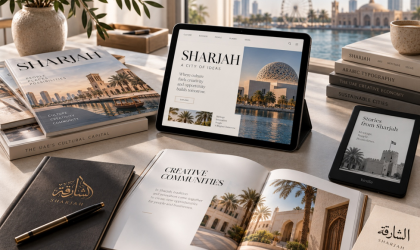

Publishing in the UAE is no longer limited to printing books or distributing newspapers. Today, a publishing business might operate entirely online, producing digital magazines, selling e-books, running paid newsletters or delivering specialist content to subscribers around the world.
For entrepreneurs, writers and media professionals, this creates opportunities to build a publishing company without investing in printing equipment, physical inventory or traditional distribution networks.
However, launching a publishing business involves more than creating a website and uploading content. You need to understand which activities require a publishing licence in the UAE, how content regulations apply and whether additional approvals are necessary before publication.
This guide explains how to start a digital-first publishing business in the UAE, including licensing, content approvals, monetisation, costs and the advantages of establishing your company through Shams Free Zone.
What a Publishing Licence Covers
A publishing licence allows a business to undertake specified publishing activities within the scope of its approved commercial licence.
Depending on the activities selected and the relevant regulatory approvals, a publishing company may produce, edit, publish, distribute or commercially exploit written and digital content.
The important distinction is between creating content and operating a publishing business. A freelance writer producing articles for clients may require a different licensed activity from a company publishing its own magazine or distributing books.
Books and Periodicals
Traditional publishing covers activities involving books, magazines, journals and other recurring publications.
Examples include:
- Publishing fiction, non-fiction and educational books.
- Producing business magazines and industry journals.
- Publishing newspapers and periodicals.
- Editing and distributing specialist publications.
- Managing authors, manuscripts and publishing rights.
- Producing printed publications for commercial distribution.
The licensing and approval requirements depend on the type of publication and how it is distributed.
For example, publishing a commercial magazine may involve regulatory obligations that differ from those associated with providing editorial services to another publisher.
Businesses planning to publish physical books or periodicals should also consider printing arrangements, distribution channels and any applicable publication permissions.
E-books and Digital Publishing
Digital publishing has significantly reduced the cost of entering the industry.
Instead of maintaining printing facilities or managing large inventories, publishers can create and distribute content through websites, subscription platforms, digital marketplaces and e-book retailers.
A digital publishing business may focus on:
- E-books and downloadable publications.
- Digital magazines and online journals.
- Paid newsletters and research publications.
- Educational guides and specialist reports.
- Online editorial platforms.
- Subscription-based content libraries.
- Interactive digital publications.
For example, an entrepreneur could launch a digital magazine covering technology startups in the Middle East. Revenue might come from subscriptions, advertising placements, sponsored features and premium industry reports.
Another publisher might produce downloadable business guides and distribute them internationally through an e-commerce website.
Both models can operate without a traditional printing operation, although they still need the appropriate commercial activities and must comply with applicable media regulations.
The key advantage of digital publishing is flexibility. A business can begin with one publication, develop an audience and introduce additional products as demand grows.
Does a Blog or Newsletter Need a Licence?
Not every personal blog or newsletter automatically requires a publishing licence.
The licensing question depends on whether the content is published as a personal activity or operated as a commercial business, as well as the services being provided.
A personal blog used to share opinions, experiences or non-commercial content may be treated differently from a website generating regular commercial revenue.
However, once publishing becomes a business activity, licensing considerations become more important.
For example, a blog may operate commercially through:
- Paid advertising placements.
- Sponsored articles and brand partnerships.
- Affiliate marketing.
- Subscription-only content.
- Paid newsletter memberships.
- Sales of digital products.
- Commercial editorial services.
A business operating these activities should hold a licence that accurately reflects its actual operations.
Importantly, a publishing licence and an advertising-related permit are not necessarily the same thing.
If a blogger or newsletter operator publishes promotional content, the UAE’s advertiser permit requirements may also apply, depending on the nature of the activity and applicable exemptions.
Similarly, a business publishing an online magazine may need a publishing-related activity and additional media approvals, rather than relying solely on a general marketing or consultancy licence.
Before monetising a blog or newsletter, confirm three things: whether a commercial licence is required, which activity covers the publishing model and whether the content or advertising activity requires separate regulatory permission.
This distinction is especially important for creators transitioning from personal content into a subscription or sponsorship-supported business.
Content Rules and the Approval Workflow
Publishing companies in the UAE must operate within the country’s media regulatory framework.
The relevant federal regulator is the UAE Media Council, which oversees media-related regulation and services, including applicable media licensing, permits and content standards.
The UAE’s media framework includes Federal Decree-Law No. 55 of 2023 Regarding Media Regulation and its implementing regulations.
These rules apply to regulated media activities and establish standards for content distributed through relevant traditional and digital channels.
What Content Rules Should Publishers Consider?
Publishers must ensure that their material complies with applicable UAE laws and media content standards.
Areas requiring particular attention include:
- Respect for religious beliefs and cultural values.
- Protection of privacy and personal information.
- Accuracy of information and avoidance of misleading claims.
- Intellectual property and copyright protection.
- Restrictions on defamatory or unlawful material.
- Rules governing advertisements and promotional claims.
- Additional requirements for sensitive or regulated subjects.
For digital publishers, compliance should be part of the editorial process rather than something considered only after publication.
A publication covering healthcare, financial products or other regulated subjects may also face sector-specific advertising and content requirements.
How the Content Approval Process Works
One of the most important points for new publishers is that obtaining a commercial publishing licence does not automatically replace every regulatory approval or publication permit.
The process can vary depending on the format, content, publication type and distribution model.
A practical workflow looks like this:
Step 1: Identify the publication type. Determine whether you are publishing a book, e-book, periodical, online magazine, newsletter or another form of digital content.
Step 2: Confirm the commercial activity. Choose a business activity that covers the publishing services you intend to provide.
Step 3: Check regulatory requirements. Confirm with Shams and the UAE Media Council whether the intended activity or publication requires additional licensing, permits, registration or content approval.
Step 4: Prepare the publication. Develop the manuscript, editorial content, publication details and any supporting information required for the relevant application.
Step 5: Obtain applicable approvals. Where prior approval or a publication permit is required, complete the relevant process before publishing or distributing the material.
Step 6: Publish and maintain compliance. Once the necessary permissions are in place, distribute the content through the approved channels and maintain appropriate editorial and compliance procedures.
Not every newsletter, article or digital publication necessarily goes through an identical pre-publication approval process. Requirements must be assessed against the specific publishing activity.
What About ISBN Numbers?

Publishers planning to release books should also consider International Standard Book Numbers (ISBNs).
An ISBN is a unique identifier used to distinguish book editions and formats. It is particularly useful for distribution through bookstores, libraries and commercial book platforms.
In the UAE, ISBN registration services are associated with the National Library and Archives, which serves as the country’s national ISBN agency.
ISBN registration is separate from commercial licensing and any applicable media publication approval.
A publisher releasing both a printed book and an e-book may need separate ISBNs for the different editions or formats, depending on the distribution arrangements.
Monetising: Subscriptions, Newsletters and Sponsorship
A digital publishing licence can support several commercial models, provided the selected activities and required approvals cover the services offered.
Rather than depending entirely on advertising, modern publishers can combine multiple income streams.
Paid Digital Subscriptions
Subscriptions create recurring revenue by charging readers for access to premium content.
For example, a digital business magazine might publish free articles while reserving detailed reports, interviews and industry analysis for paying subscribers.
Subscription models may include monthly memberships, annual access or premium content packages.
Publishers should consider payment processing, cancellation policies, customer data protection and VAT obligations when designing their subscription offering.
Paid Newsletters
Newsletters are particularly attractive for niche publishers because they allow direct communication with readers.
A newsletter covering UAE entrepreneurship, property markets or emerging technologies could offer free weekly updates alongside paid research or exclusive analysis.
This model can be launched with relatively modest operating costs.
However, charging subscribers turns the newsletter into a commercial activity, making the correct business licensing and regulatory assessment important.
Sponsorships and Advertising
Digital magazines and newsletters can generate income by selling advertising placements or sponsored content.
Common examples include:
- Sponsored newsletter editions.
- Display advertising on publication websites.
- Brand-sponsored editorial features.
- Sponsored research reports.
- Advertising packages across websites and email newsletters.
Sponsored material should be appropriately identified, and publishers must comply with relevant advertising standards.
Where an individual promotes brands or products through their own content, UAE advertiser permit requirements may also become relevant.
The commercial publishing licence alone should not be assumed to authorise every form of promotional activity.
Selling E-books and Digital Products
Publishers can also generate revenue through direct sales of downloadable content.
Examples include industry guides, educational e-books, research publications and specialist reference materials.
A digital publisher might sell individual products, offer bundled collections or include publications within a subscription membership.
Before launching, confirm that the licence covers the intended publishing and sales activities, particularly where digital publishing is combined with online trading.
Choosing a Revenue Model
| Publishing model | Potential revenue sources |
|---|---|
| Digital magazine | Subscriptions, display ads, sponsorships |
| Paid newsletter | Monthly memberships, annual subscriptions |
| E-book publisher | Individual sales, licensing, distribution royalties |
| Industry research publisher | Premium reports, corporate subscriptions |
| Specialist editorial platform | Advertising, sponsored features, paid access |
For many new publishers, a combination of subscription income and digital product sales can provide a more diversified revenue base than advertising alone.
Publishing Licence vs Media Licence
The terms publishing licence and media licence are sometimes used interchangeably, but they do not always describe the same permitted activities.
A media licence is a broad commercial category that may include several different types of creative, communications and content-related businesses.
A publishing licence or publishing-related activity is more specifically associated with producing and distributing publications.
| Activity | Licensing consideration |
|---|---|
| Publishing digital magazines | Publishing or relevant electronic media activity |
| Selling original e-books | Publishing activity and any relevant online sales activity |
| Providing copywriting services | Writing, content creation or related professional activity |
| Operating an advertising agency | Advertising or marketing activity |
| Producing video content | Video production or relevant media activity |
| Managing a paid newsletter | Relevant publishing or digital content activity, depending on the model |
The exact activity descriptions and codes depend on the licensing authority.
A company planning to publish magazines, create promotional videos and sell advertising services may need multiple approved activities.
This is why defining the business model before applying for a licence is essential.
Free Zone vs Mainland for Publishers
Entrepreneurs establishing a publishing company in the UAE can generally consider free zone and mainland business structures, subject to the relevant activity approvals.
Both routes offer advantages depending on the company’s operating requirements.
Free Zone Publishing Company
A UAE free zone can be attractive for digital-first publishers that primarily operate online or serve customers internationally.
Potential advantages include:
- 100% foreign ownership.
- Business setup packages suited to smaller companies.
- Access to eligible business activities under one company structure.
- Visa options for founders and employees.
- Opportunities to operate without leasing a large traditional office.
- A practical base for digital publishing and international content distribution.
Free zone companies must still comply with applicable UAE regulations and any restrictions on conducting activities outside their licensed jurisdiction.
A free zone licence does not automatically remove the need for additional permissions when conducting regulated activities elsewhere in the UAE.
Mainland Publishing Company
A mainland company may be appropriate for publishers requiring a particular onshore operating presence, physical distribution infrastructure or activities that are better accommodated under mainland licensing.
However, mainland publishers must also satisfy applicable media regulations and approval requirements.
Which Structure Is Better?
For a digital magazine, e-book publisher or online subscription platform, a free zone can offer a practical starting point.
For a business involving large-scale physical distribution, retail operations or other onshore activities, the mainland route may deserve closer consideration.
The best choice depends on your publishing format, customers, distribution channels and regulatory requirements.
How to Set Up a Publishing Company in the UAE, Step by Step
Starting a publishing business becomes easier when the licensing process is organised around the company’s intended activities.
Step 1: Define Your Publishing Model
Decide what your business will produce and how it will earn revenue.
For example, you might establish a digital magazine supported by subscriptions and advertising, or an e-book publishing company focused on educational publications.
Step 2: Choose Your Business Activities
Identify the publishing, digital content or related activities required for your business.
If you plan to combine publishing with advertising, online sales or other services, confirm whether additional activities are necessary.
Step 3: Select Your Jurisdiction
Compare free zone and mainland structures based on your operating model, visa needs and expected business activities.
Shams Free Zone offers a business setup route for entrepreneurs working across media, creative and other eligible commercial sectors.
Step 4: Reserve Your Company Name
Choose a suitable trade name that meets UAE naming requirements and submit it for approval.
Step 5: Submit Your Application
Provide the required shareholder details, identification documents and proposed business activities.
Additional documentation may be requested depending on the company structure and regulatory requirements.
Step 6: Obtain Your Business Licence
Once the application is approved and the relevant fees are paid, the licensing authority can issue the commercial licence.
For activities requiring external regulatory approval, the applicable approval process must also be completed.
Step 7: Complete Publishing-Specific Requirements
Confirm whether your publications require media permits, content approvals, ISBN registration or other formalities.
These requirements may differ between e-books, periodicals and other online publications.
Step 8: Arrange Visas and Banking
If required, proceed with the relevant establishment and residence visa processes.
You can also apply for a corporate bank account to manage subscriptions, publishing income and operating expenses.
Bank account approval remains subject to the financial institution’s own compliance requirements.
Step 9: Launch Your Publishing Platform
Build your website, establish distribution arrangements and introduce the payment systems needed for your chosen business model.
Before launching, review your content policies, copyright arrangements, subscription terms and advertising compliance.
Documents and Costs
The documents required to establish a publishing company depend on the business structure, shareholders and selected activities.
Common requirements may include:
- Passport copies of shareholders.
- UAE residence visa or Emirates ID details, where applicable.
- Proposed company name.
- Selected business activities.
- Shareholder and company registration information.
- Additional corporate documents for company shareholders.
- Regulatory approvals or supporting publication details, where required.
Certain publishing activities may require additional information or permissions from the relevant authorities.
How Much Does a Publishing Licence Cost in the UAE?
At Shams Free Zone, business setup packages start from AED 5,760, depending on the selected package and eligibility.
Shams also offers a 60-minute business licensing process for eligible applications with complete documentation, subject to the applicable requirements and approvals.
The final cost of establishing a publishing company depends on several factors, including:
- The publishing activities selected.
- The type of business licence required.
- Visa requirements.
- Workspace arrangements.
- Additional regulatory approvals.
- Publication-related registrations and permits.
- Banking, technology and operational expenses.
For a digital-first publisher, expenses may also include website development, content management software, newsletter platforms, payment processing and editorial production.
The advertised starting setup price should not be treated as the guaranteed total cost of a regulated publishing business.
For an accurate quotation, confirm the selected publishing activity and any external approval requirements with the Shams team before applying.
Publishing from Sharjah’s Media Zone: The Shams Route
Sharjah has a strong cultural and publishing identity, making it a natural location for entrepreneurs building businesses around books, media and digital content.
Shams Free Zone, also known as Sharjah Media City, provides a business setup environment for entrepreneurs, creative professionals and companies working across eligible media and commercial activities.
For digital-first publishers, Shams offers a practical way to establish a UAE business without necessarily building a traditional publishing office from the beginning.
Why Consider Shams for a Publishing Business?
100% foreign ownership. International entrepreneurs can establish eligible companies with full ownership, without requiring a local shareholder.
Flexible business activities. Depending on the approved activity list, entrepreneurs can select relevant business activities suited to their publishing and related commercial services.
Cost-effective setup. With business setup packages starting from AED 5,760, Shams provides an accessible entry point for eligible entrepreneurs.
Fast business licensing. Eligible applications can benefit from the 60-minute licensing process, helping founders move forward with their business plans more quickly.
Visa and workspace options. Entrepreneurs can explore visa allocations and workspace arrangements based on their business requirements.
A location connected to media and creativity. Establishing a company in Sharjah’s media-focused free zone can be particularly relevant for businesses producing editorial, educational and creative content.
It is important to confirm the availability of the specific publishing activity before applying. Any required UAE Media Council permits, publication approvals or other external permissions remain separate from the commercial licence process.
Start Your Publishing Business with Shams
Whether you want to launch a digital magazine, publish e-books or build a subscription-based newsletter, the first step is establishing the right legal foundation.
Shams Free Zone can help you explore the business activities, company setup options and visa arrangements relevant to your publishing plans.
Start your publishing business with Shams Free Zone and turn your content into a commercially established UAE business.
How much does a publishing licence cost in the UAE?
The cost depends on the jurisdiction, selected publishing activities, visa requirements and applicable regulatory approvals. Shams business setup packages start from AED 5,760 for eligible setups, but additional publishing-related approvals and operating expenses may increase the total.
Can foreigners own a publishing company in the UAE?
Yes. Foreign entrepreneurs can generally establish a company with 100% ownership in UAE free zones such as Shams, subject to activity eligibility and applicable regulatory requirements.
Is a licence required for blogging in the UAE?
Not every personal, non-commercial blog automatically requires a publishing licence. However, operating a blog as a commercial business may require an appropriate business licence. Sponsored content and advertising activities may also trigger separate permit obligations.
Which free zone suits a publishing business?
The best free zone depends on the publication type, business activities, regulatory approvals and budget. Shams Free Zone is worth considering for digital-first publishing entrepreneurs because of its media-focused environment, flexible setup options and business licensing services. Confirm that the intended publishing activity is available before applying.
How long does it take to get a publishing licence in the UAE?
The timeline depends on the licensing authority, application completeness and any external approvals. Shams offers a 60-minute licensing process for eligible applications, but publishing activities requiring additional media approvals may take longer. The commercial licence issuance timeline should not be confused with the time needed to obtain publication-specific permissions.
